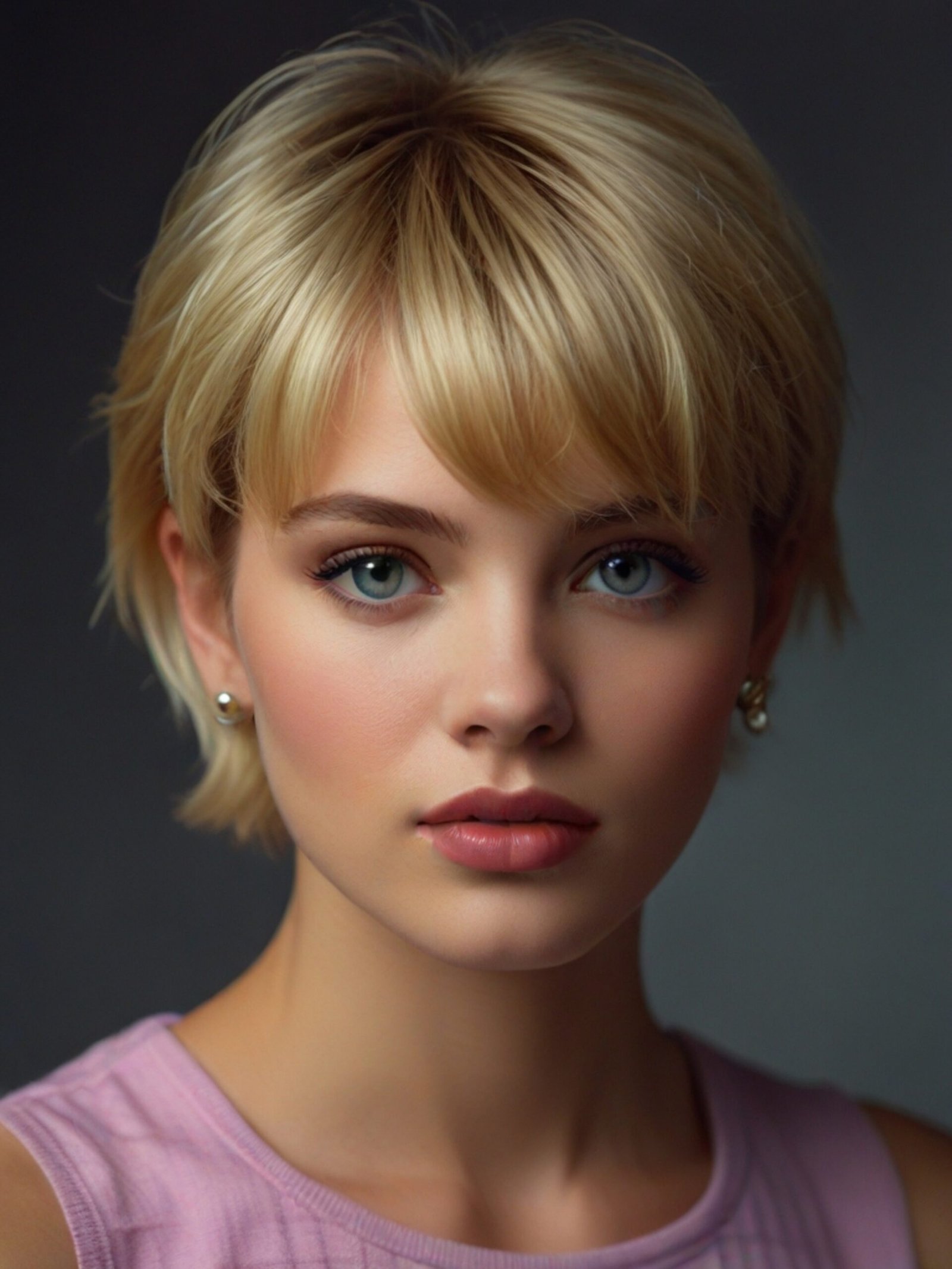
We rarely notice everything about a person when they enter a room.
The mind edits quickly. We register movement, posture, expression, clothing and, sometimes, something much harder to define. A person may appear particularly composed without wearing anything remarkable. Someone else may have an unmistakable presence despite having made very little effort. Often, the details that create the impression are the ones we could not identify if asked.
Hair is one of those details.
It frames the face before we consciously think about it. It catches movement when someone turns their head. It changes the proportions of a silhouette. Under different light, the same haircut can appear sharper, softer, fuller or more relaxed. Yet good hair rarely looks as though it is asking to be noticed.
That is perhaps what makes it so interesting.
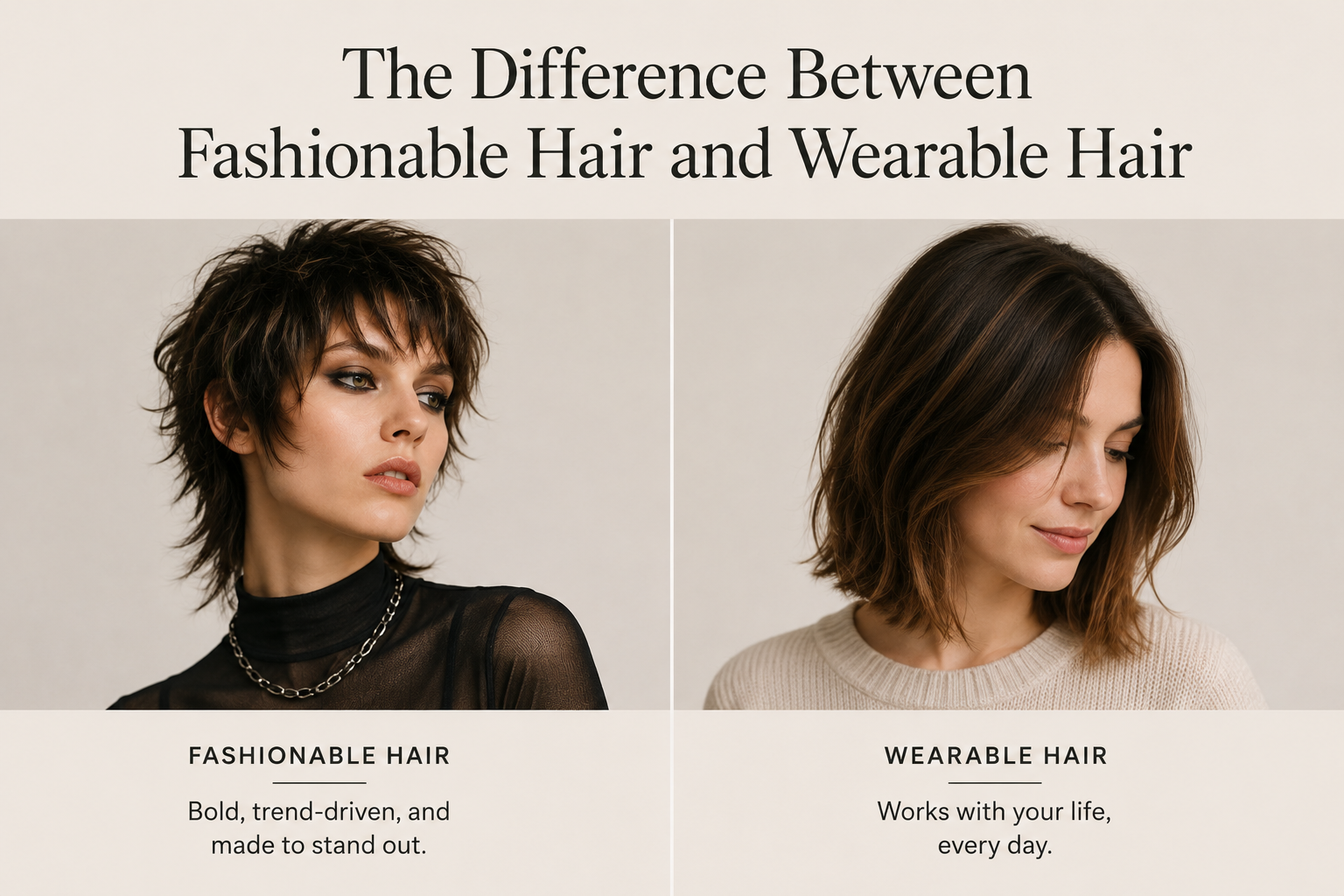
There is a difference between hair that is visually impressive and hair that seems completely at home on the person wearing it. The first can be striking. The second can be memorable in a quieter way. It feels less like an accessory and more like part of the person.
This quality is not necessarily produced by an elaborate style. Sometimes it is the opposite. A well-shaped bob, a loose wave, a clean crop or a natural curl can have presence precisely because nothing about it appears forced.
The effect is particularly noticeable in places where people are constantly moving between different settings. A London street provides hundreds of small examples. Someone leaves a tube station with their hair slightly disrupted by the wind. Another person steps out of a café with a polished blow-dry. A cyclist arrives somewhere with curls that have expanded in the damp air. A woman crosses the road with a fringe that has become slightly uneven during the day.
None of these things is perfect.
They are alive.
Perhaps that is why the current appetite for highly polished but natural-looking hair feels less like a passing aesthetic and more like a return to something fundamental. Recent editorial coverage has similarly noted a move towards healthy-looking, fluid hair with movement rather than styles that appear overly rigid or constructed.
The appeal is easy to understand. Hair that moves naturally leaves room for the person underneath it.
A salon can create the foundation for that ease, but what happens afterwards is just as important. The haircut has to meet ordinary life. It has to cope with the morning rush, the commute, the weather and the occasional evening when there is only enough time for a quick change in styling.
That is where thoughtful cutting becomes valuable. The best shapes tend to have more than one version. They can look polished when carefully styled but still retain their character when allowed to dry naturally. They can be worn with a little product or without much at all.
Products have a role in that adaptability too. The modern hair-care shelf contains an extraordinary variety of creams, oils, sprays, foams and treatments, but the most useful products are not necessarily the ones that create the strongest immediate effect. Often, they are the ones that support what the haircut is already trying to do.
A little definition can bring out natural texture. A small amount of smoothing product can help the hair sit more cleanly. A conditioning treatment can improve the feel of the lengths so that movement becomes more fluid. Good products do not have to announce themselves. Their success can be measured by how little you notice them afterwards.
This is perhaps one of the reasons professional advice from top hairdresser remains useful even in an age when almost every hair question can produce hundreds of online answers. Information can tell you what a product is designed to do. It cannot always tell you what your particular hair needs today.
Hair changes.
The same person can have different requirements from one season to the next. A style that works beautifully when the air is dry may need another approach when humidity arrives. A colour can alter the way the hair reflects light. A change in length can alter how much product is necessary. Even a haircut that has been successful for years may eventually need a small adjustment.
None of this needs to become complicated.
There is pleasure in understanding hair without becoming obsessed with it. Knowing what makes it behave well. Knowing which product is genuinely useful. Knowing when to leave it alone. Knowing that a little imperfection can sometimes make the whole thing feel more natural.
Perhaps that is also why hair can communicate something about confidence without actually being a statement. Someone who knows their hair may not look as though they have spent hours thinking about it. They simply move through the day without needing to adjust it constantly.
The best salon work can create that feeling.
Not by making every strand behave perfectly, but by giving the hair enough shape and support that it can be left to move. A stylist might create layers that fall naturally into place, remove weight where it is unnecessary or preserve fullness where it gives the shape character. The technical decisions become almost invisible once the person walks out into the street.
And that invisibility is part of the craft.
We tend to remember the person, not the haircut.
We remember the way someone laughed across a table, the way they turned towards us, the expression they made when they heard something unexpected. The hair becomes part of those memories without necessarily standing apart from them.
That is perhaps the most successful role hair can play. Not to dominate the impression, but to complete it.
A good hairstyle does not need to make someone look like a different person. It can simply make the person easier to see.
And when someone walks into a room and everything seems quietly in place, we may never know exactly why. We only know that they look comfortable there.