Conditioner is one of those haircare products that can easily become an afterthought.
Shampoo gets most of the attention. Styling products tend to have more obvious personalities. Treatments promise intensive results. Conditioner, meanwhile, is often treated as the quiet middle step: apply, leave for a minute or two, rinse and move on.
But that seemingly simple step can have a considerable influence on how hair feels and behaves.
The difference becomes particularly noticeable when hair is exposed to regular styling, colouring, environmental stress or simply the everyday wear that comes from brushing, washing and drying.
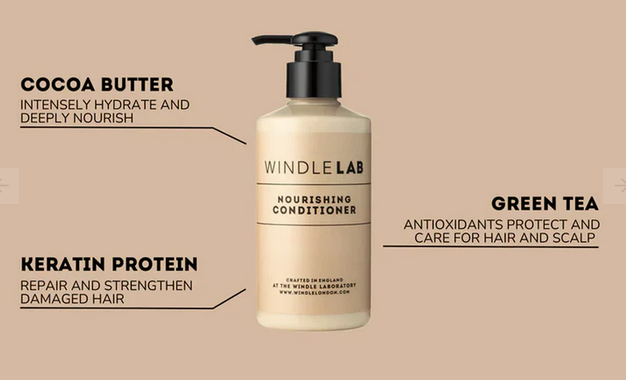
Windle LAB Nourishing Conditioner takes a more restorative approach to this part of the routine. Windle London describes it as a repairing conditioner formulated with keratin proteins, while the ingredient list includes cocoa seed butter, glycerin, hydrolysed keratin, creatine and green tea extract.
The interesting thing about the product is not simply that it is designed to make hair softer.
Most conditioners can make that claim in one form or another.
The more useful question is whether conditioning can improve the way hair behaves without leaving it excessively coated or difficult to style afterwards.
That balance is particularly important.
Hair that feels dry often needs more conditioning, but more does not always mean better. Applying an unnecessarily heavy product to hair that is already relatively fine can leave it flat. Conversely, using too little conditioning on thirsty or stressed hair can leave the lengths difficult to detangle and uncomfortable to handle.
A good conditioner therefore needs to meet the hair somewhere in the middle.
This is where understanding the difference between softness and weight becomes important.
Softness is generally desirable.
Weight is dependent on the individual.
Someone with thick, coarse or naturally dry hair may appreciate a richer feel. Someone with finer hair may want the benefits of conditioning while retaining movement and volume.
Windle LAB Nourishing Conditioner is positioned as a nourishing and repairing product, making it particularly relevant for hair that needs more than basic detangling.
The inclusion of keratin-derived ingredients is notable because keratin is closely associated with the structure of hair itself. The formulation also contains cocoa seed butter, which contributes a richer conditioning character, alongside glycerin and other conditioning ingredients designed to improve manageability.
None of this means that the conditioner should be regarded as a miracle repair treatment.
Haircare is rarely that simple.
Once a strand has been significantly damaged, a cosmetic product cannot literally return it to its original biological state. What a well-formulated conditioner can do is improve the surface feel, manageability and appearance of the hair while helping it behave better during everyday styling.
That is a more realistic and useful expectation.
One of the strongest reasons to take conditioner seriously is detangling.
Every time hair is brushed or combed, there is potential for mechanical stress. Wet hair can be particularly vulnerable to rough handling. If the strands are difficult to separate, repeated pulling can make an already fragile situation worse.
A conditioner that improves slip can therefore make the entire post-wash routine easier.
That may sound like a small benefit.
It is not.
If the hair becomes easier to comb, there is less temptation to pull aggressively through knots. The ends are easier to handle. Styling becomes less frustrating. The hair may also feel smoother once dry.
These are cumulative improvements rather than dramatic overnight transformations.
That is perhaps the right way to think about a product like Nourishing Conditioner.
Its value is not necessarily in creating an immediately spectacular visual effect.
It is in making ordinary haircare more manageable.
The product also makes sense when considered alongside Windle London’s professional background.
A salon sees hair in many different states. Stylists work with hair before colouring, after colouring, before cutting and after styling. They see how different textures respond to products and how clients struggle with their hair at home.
That experience creates a practical perspective on conditioning.
A product does not only need to work in a salon.
It needs to make sense in a bathroom.
This distinction is important because salon styling can make almost any hair look impressive for a few hours. Professional tools, technique and controlled conditions can produce a finish that is difficult to reproduce at home.
The real test of a conditioner is what happens the next morning.
Does the hair remain manageable?
Does it feel comfortable?
Does it retain movement?
Do the ends still feel soft?
These are much more useful questions.
Nourishing Conditioner is also interesting because Windle London places it within broader routines rather than presenting it as an isolated solution.
For example, the company’s Making Waves regime pairs Nourishing Conditioner with Everyday Shampoo and a texturising spray, creating a routine that moves from cleansing to conditioning and then styling.
That approach reflects how haircare actually works.
Different products perform different jobs.
The shampoo cleanses.
The conditioner improves the feel and manageability of the hair.
The styling product then determines the final appearance.
Trying to make one product perform all three functions is not necessarily the best approach.
A conditioner should be allowed to be a conditioner.
Its job is to prepare the hair for whatever comes next.
That preparation becomes particularly useful for people who regularly use heated styling tools.
Blow-drying, straightening and curling can all place stress on the hair over time. A routine that leaves the hair excessively dry or difficult to manage can make styling more demanding.
Better conditioning can make the hair easier to work with.
That does not eliminate heat damage, of course. Heat protection remains important when using heated tools.
But a smoother, better-conditioned strand can generally be easier to handle.
There is also something appealing about the relatively straightforward philosophy behind a traditional conditioner.
The product does not need to be complicated.
It needs to feel good when applied.
It needs to distribute easily.
It needs to rinse without leaving an unpleasant residue.
And it needs to leave the hair in a condition where the next stage of the routine feels easier.
That simplicity can be underrated.
The beauty industry often introduces increasingly elaborate routines, but most people do not need twelve products to have good hair.
They need the right products for their particular needs.
For someone whose hair tends towards dryness, roughness or difficult detangling, a nourishing conditioner can be more valuable than another styling product.
For someone with naturally oily roots and very fine lengths, the application may need to be more targeted.
This is where professional advice can help.
A stylist can usually identify whether hair needs more moisture, more conditioning, more volume or simply a different technique.
The product itself is only one part of the equation.
There is also a useful distinction between hair that feels “soft” and hair that feels “healthy.”
They are not necessarily identical.
A silicone-rich or heavily coating product can sometimes make hair feel extremely smooth immediately. That can be enjoyable, but the underlying condition of the hair has not necessarily changed.
A good routine should therefore be judged over time.
Does the hair remain manageable?
Does it break less easily during everyday handling?
Does the styling routine become simpler?
Does the hair maintain a more polished appearance between appointments?
Those longer-term observations tell us more than the first few minutes after rinsing.
This is perhaps why professional haircare ranges can be interesting to review.
They are often developed around the practical problems stylists repeatedly encounter rather than simply around marketing categories.
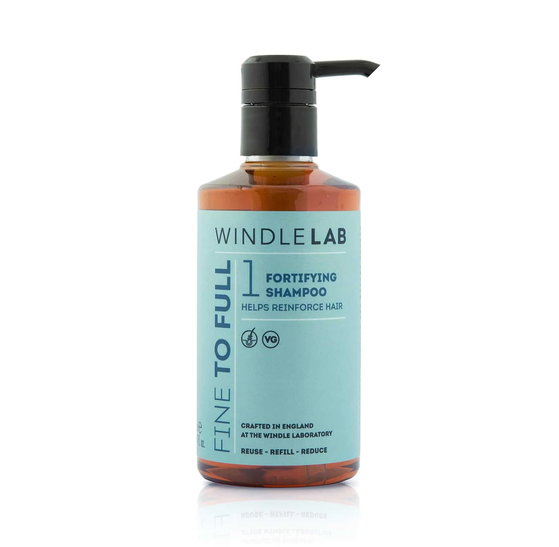
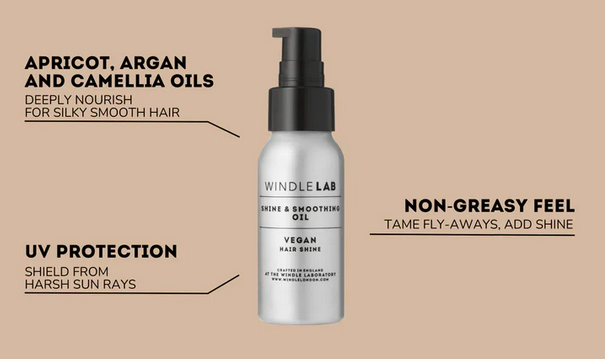
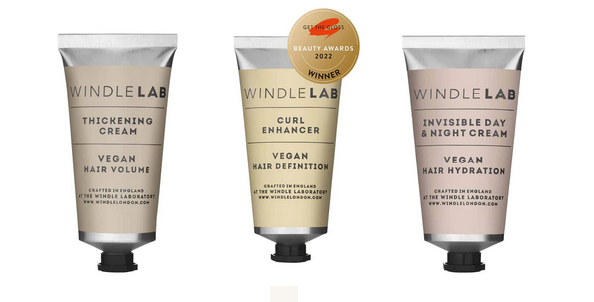
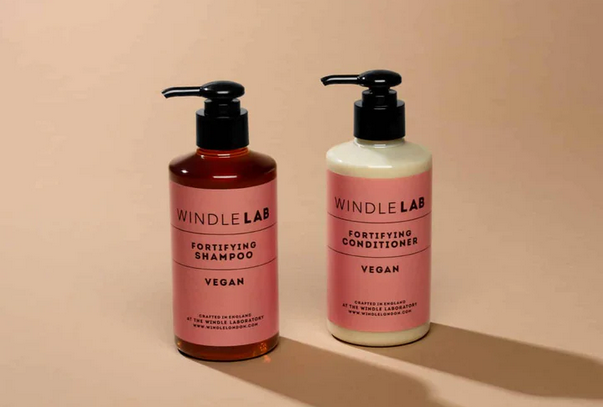
Windle London has built its haircare collection around this connection between salon experience and home routines, with different conditioners designed for different hair needs. Its current range includes nourishing, fortifying, purple and ultra-nourishing options, among others.
That variety is important because there is no universal definition of “conditioned hair.”
Fine hair may need lightness.
Curly hair may need softness and definition.
Colour-treated hair may need help maintaining condition.
Very dry hair may require more intensive nourishment.
The best conditioner is therefore not necessarily the richest one.
It is the one that suits the hair in front of you.
Windle LAB Nourishing Conditioner is most interesting in that context.
It is a product aimed at improving the condition, softness and manageability of hair, with a formulation that combines conditioning agents and ingredients associated with nourishment and strengthening.
Its strength is not that it promises to transform every possible hair type.
Its strength is that it occupies a clear place in a sensible routine.
Cleanse.
Condition.
Style.
Repeat consistently.
That may sound less exciting than a dramatic overnight transformation, but it is much closer to how good haircare actually works.
Healthy-looking hair is usually the result of many small decisions made repeatedly.
The right haircut.
A suitable shampoo.
A conditioner that matches the hair.
Reasonable heat use.
Careful brushing.
Occasional treatments when necessary.
Professional advice when something changes.
Conditioner sits quietly in the middle of that system.
But perhaps it deserves more attention than it usually receives.
Because when hair feels easier to handle, softer without being weighed down and more comfortable to style, the entire routine changes.
And sometimes the best haircare products are not the ones that make the biggest promises. They are the ones that make everyday hair feel a little easier.