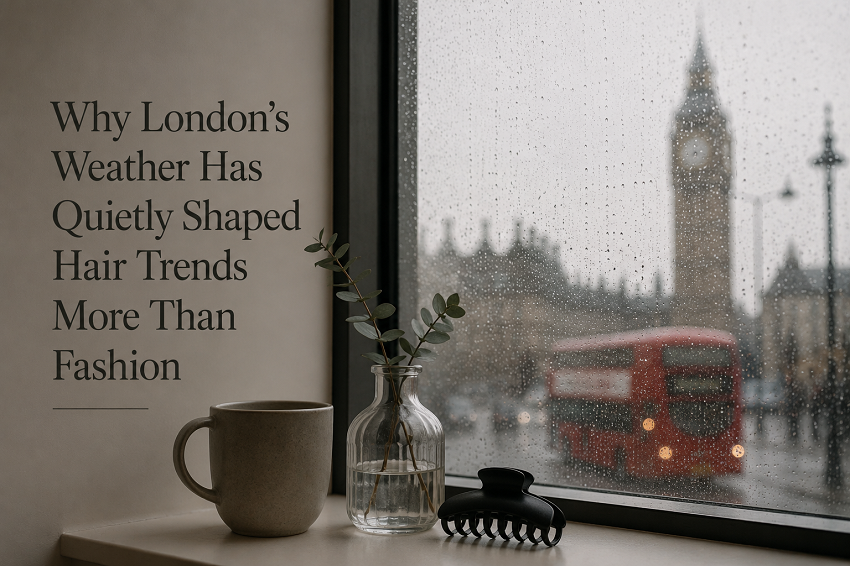
Ask someone what influences hair trends and you’ll usually hear the same answers.
Fashion Week.
Celebrities.
Social media.
Runways.
Influencers.
All of those factors certainly play a role. But if you spend enough time observing how people actually wear their hair across London, another influence becomes impossible to ignore.
The weather.
Not the glamorous answer. Not the fashionable answer.
But arguably the most important one.
London’s relationship with weather is unique because unpredictability is almost built into daily life. A morning can begin with sunshine, shift to wind by lunchtime and finish with rain before the evening commute.
That reality changes how people approach beauty.
Particularly hair.
Unlike clothing, which can be adjusted throughout the day, hair needs to survive whatever conditions appear after leaving the house. The result is a beauty culture shaped less by fantasy and more by practicality.
Historically, London has never embraced glamour in quite the same way as cities like Los Angeles or Milan.
The city’s style identity has often leaned towards individuality, functionality and understatement.
Hair naturally followed.
Even when highly polished beauty trends dominated internationally, London’s salon culture often favoured styles that retained some movement and imperfection.
Part of that preference stems from climate.
Perfectly sculpted hair and unpredictable weather have never formed a particularly successful partnership.
As a result, many of the styles that became popular locally shared similar characteristics.
They moved.
They adapted.
They aged well throughout the day.
Rather than appearing untouched, they appeared lived in.
That distinction might seem subtle, but it has shaped decades of beauty culture.
Consider the popularity of textured cuts.
Or soft layers.
Or natural-looking colour.
These approaches aren’t simply aesthetic choices. They also happen to perform better under real-world conditions.
A sudden gust of wind may completely dismantle a rigid style.
A softer style often survives.
The same applies to colour.
Highly contrasting colour placements frequently require precise maintenance. Softer colour transitions tend to remain flattering for longer periods between appointments.
Again, practicality influences popularity.
This doesn’t mean Londoners care less about beauty.
If anything, the opposite is true.
The city has some of the most respected salons and creative hairdressers anywhere in the world.
The difference is that beauty often needs to function alongside reality.
The commute still happens.
The rain still arrives.
The Underground remains warm.
Life continues.
And hair must adapt accordingly.
What’s particularly interesting is how global beauty trends have gradually moved closer to this mindset.
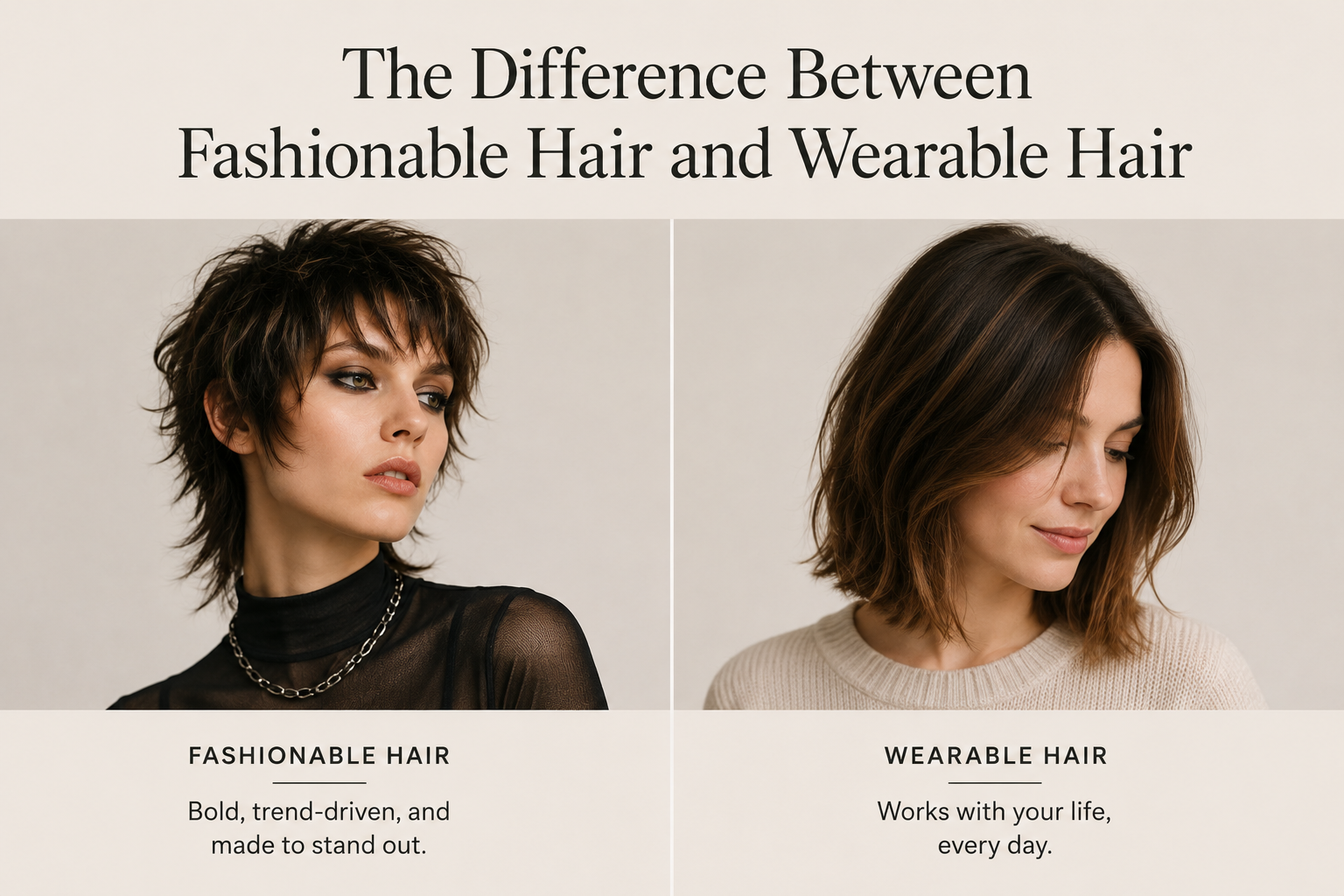
Over the past decade, many international trends have become softer and more wearable.
Movement replaced stiffness.
Texture replaced perfection.
Individuality replaced uniformity.
In many ways, mainstream beauty culture started embracing principles that London had quietly favoured for years.
There’s also a psychological element to weather-driven beauty.
People who live with unpredictable conditions often develop more realistic expectations.
Hair doesn’t need to remain perfect.
It simply needs to remain good.
That mentality creates different beauty priorities.
Instead of asking:
“How will this look immediately after styling?”
People increasingly ask:
“How will this look six hours later?”
That’s a far more useful question.
It’s also one that has influenced salon consultations significantly.
Modern stylists spend increasing amounts of time discussing maintenance rather than simply appearance.
Can you recreate this style yourself?
Will it suit your routine?
How will it respond to your daily environment?
Those considerations matter because hair exists in the real world, not just inside salons.
Perhaps that’s why London’s influence on beauty feels so enduring.
The city rarely rewards perfection for long.
Eventually the weather arrives.
And when it does, the styles that survive are usually the ones designed around reality rather than fantasy.
That’s not a limitation.
It’s often where the most interesting beauty begins.
Because truly great hair isn’t necessarily the hair that remains untouched.
It’s the hair that still looks good after life has had a chance to happen.